Products / Smart Lock Products
Lock + branded user app + management portal
Build a smart lock with hardware and access software aligned.
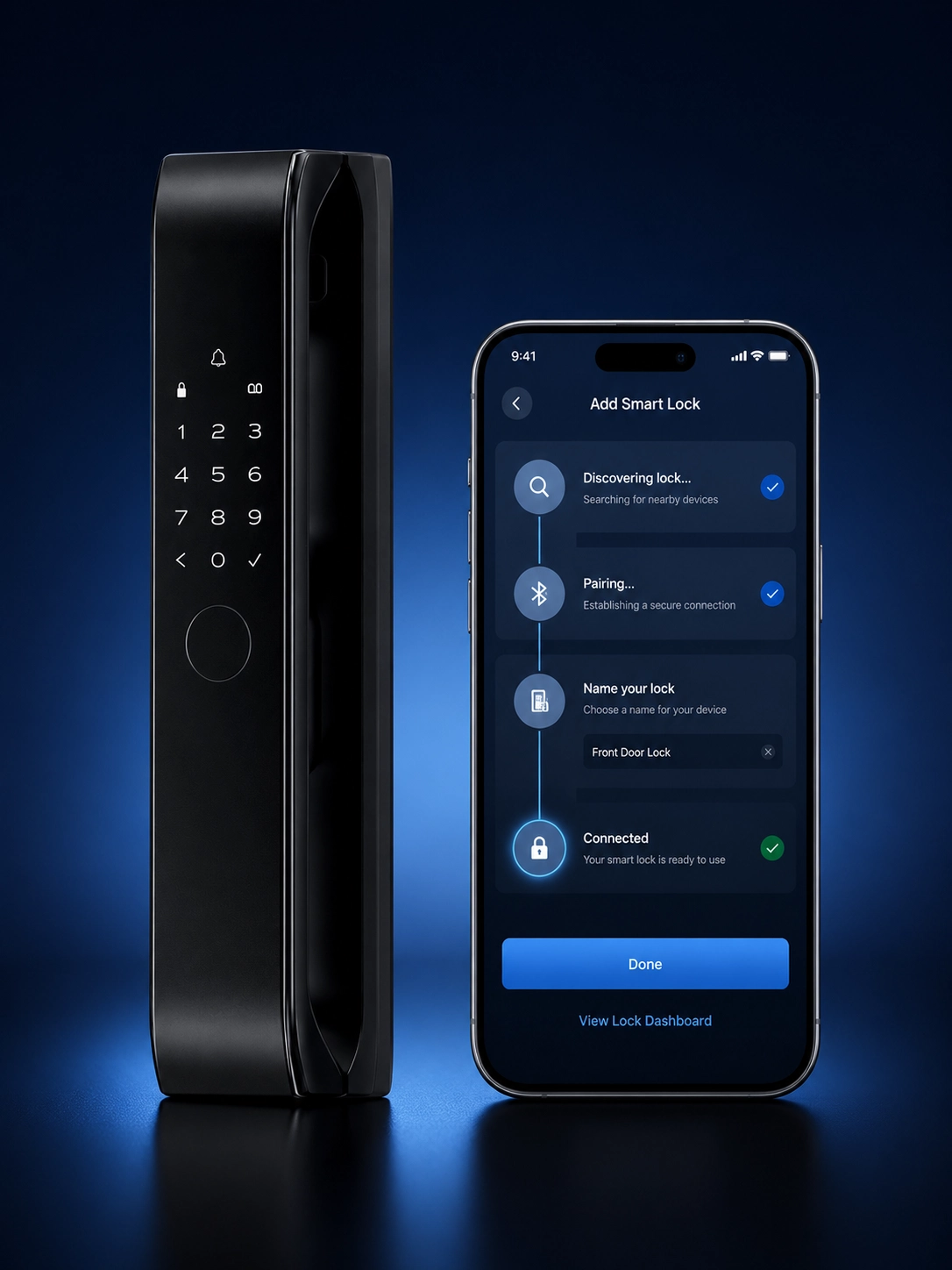
Hanwu develops OEM/ODM smart lock products by coordinating the lock hardware, access methods, low-power firmware, branded app, cloud permissions and production checks around one device configuration.
- Starting point
- Smart lock products
- Project fit
- Lock brands needing product and software together
- Program path
- Configuration, sample, pilot and production release
When Smart lock products are the right starting point
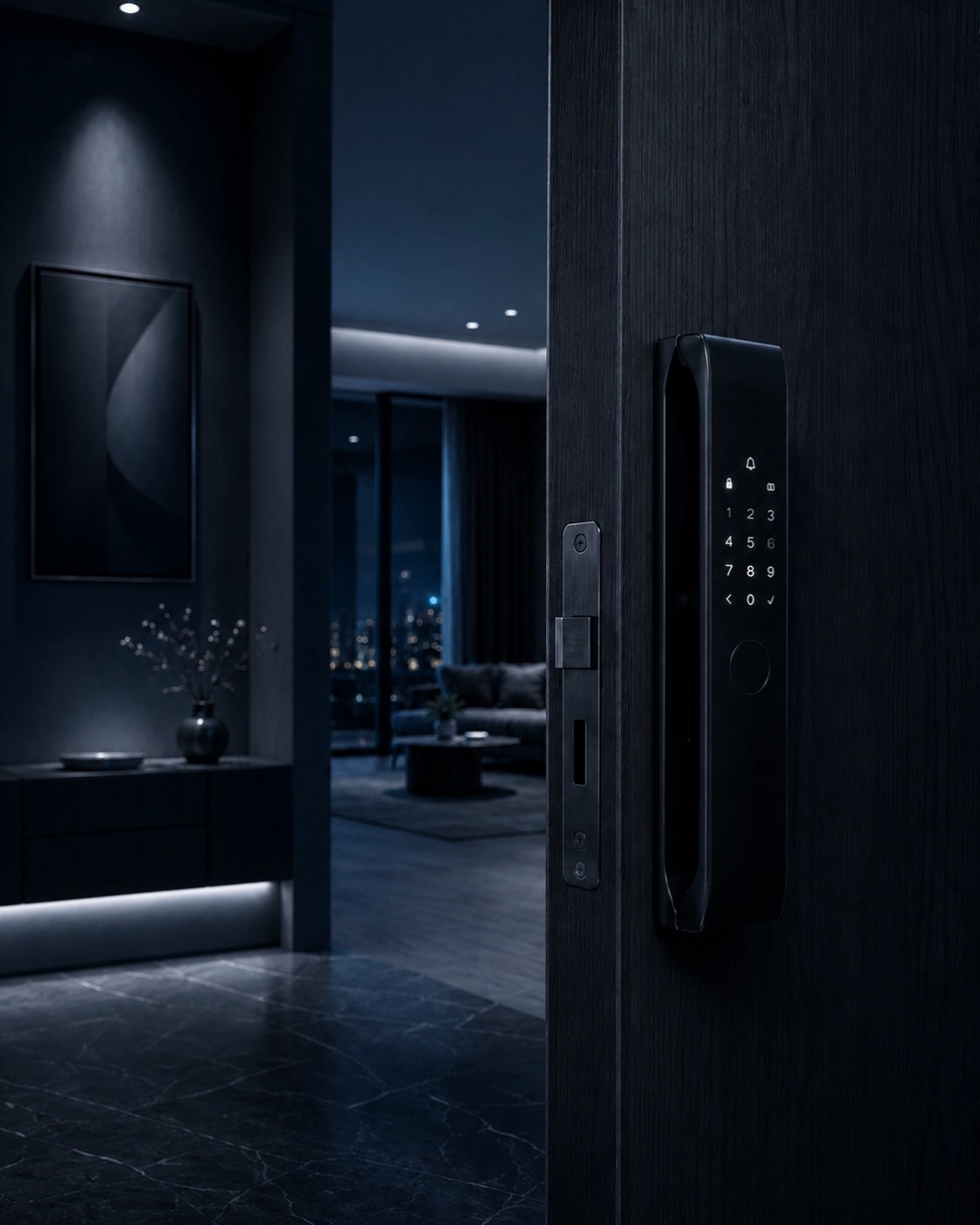
A reliable smart lock is defined by installation, access methods, local and remote permissions, battery behavior, onboarding, records and fault recovery. The device, app and cloud model are agreed before the sample becomes the basis for a pilot.
Apartment and rental access
Hotel or facility access
Private-platform access systems
Core product functions
- Module, antenna and PCBA integration
- Low-power embedded firmware
- Access-role and credential logic
- Mobile onboarding and device management
- Cloud accounts, permissions and records
- Programming, fixture and functional testing
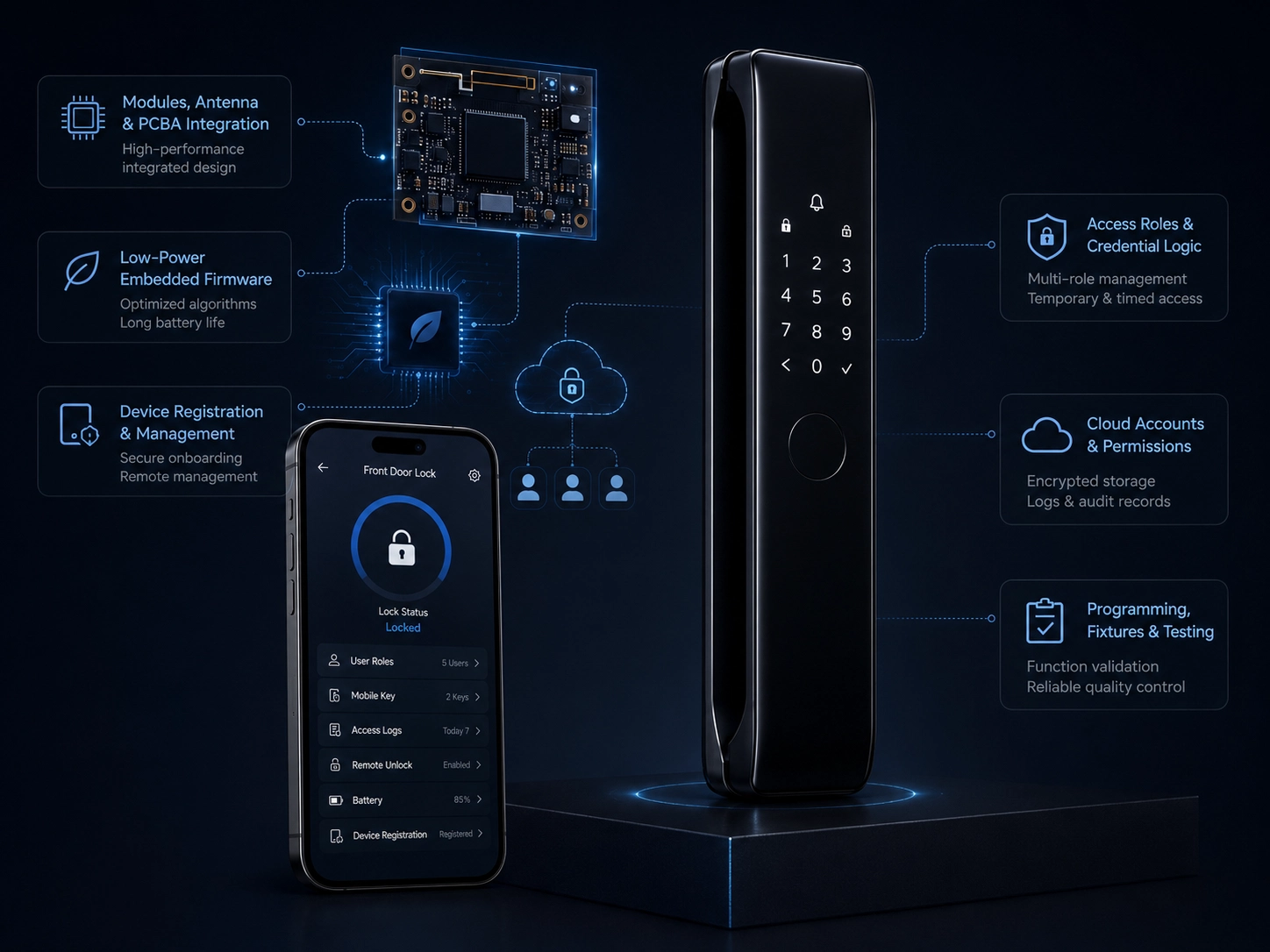
A branded lock app and management portal around the physical lock
The product program can include onboarding, everyday access, temporary credentials, event history and multi-site administration under the buyer brand.
Branded mobile lock app
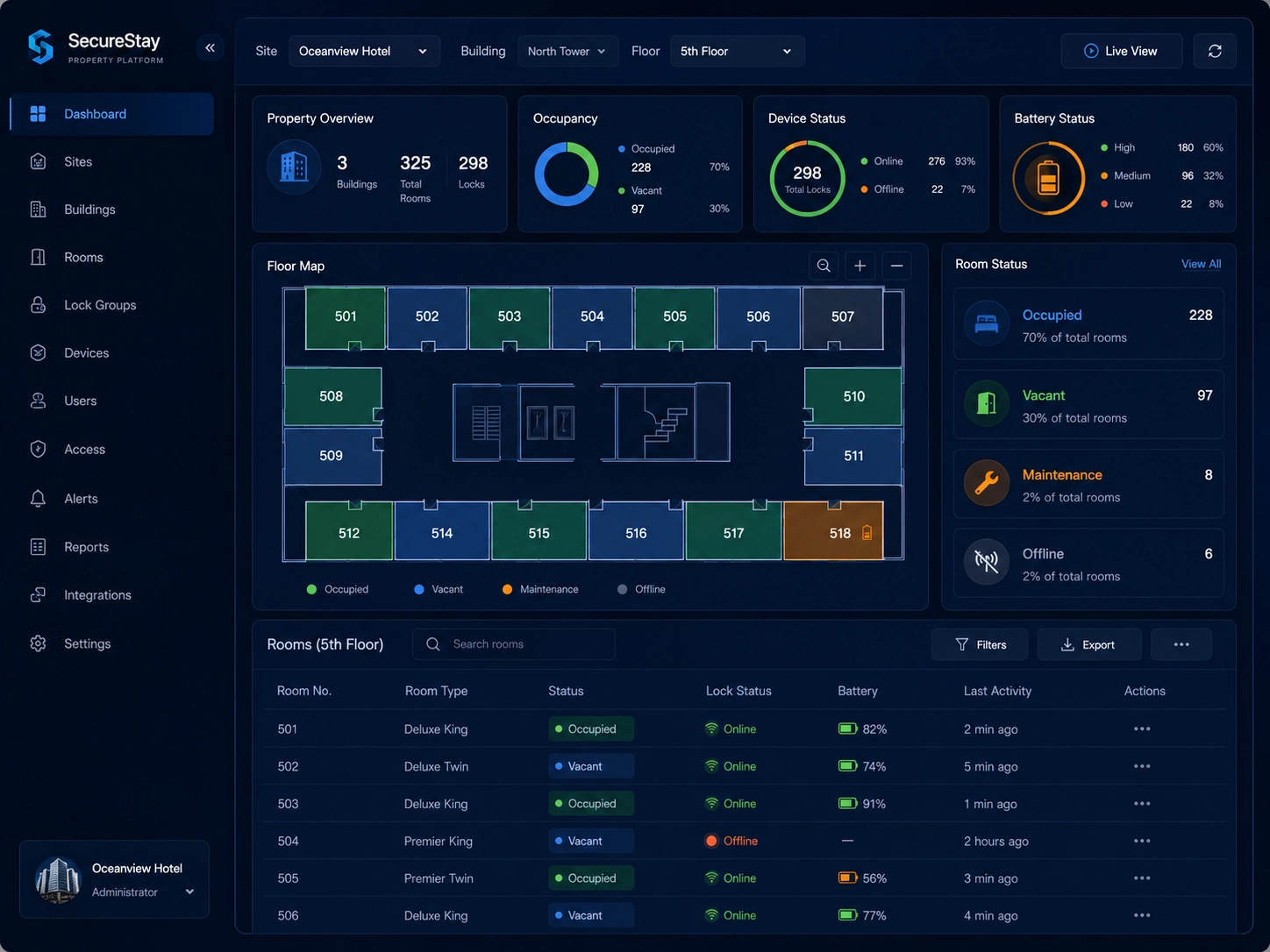
Support setup, lock control, temporary access, notifications and history through a buyer-branded mobile experience.
Residents, guests, staff and property users- Onboard and pair a lock
- Control access and issue temporary credentials
- Review notifications and access history
.webp)
Account setup, pairing and lock naming
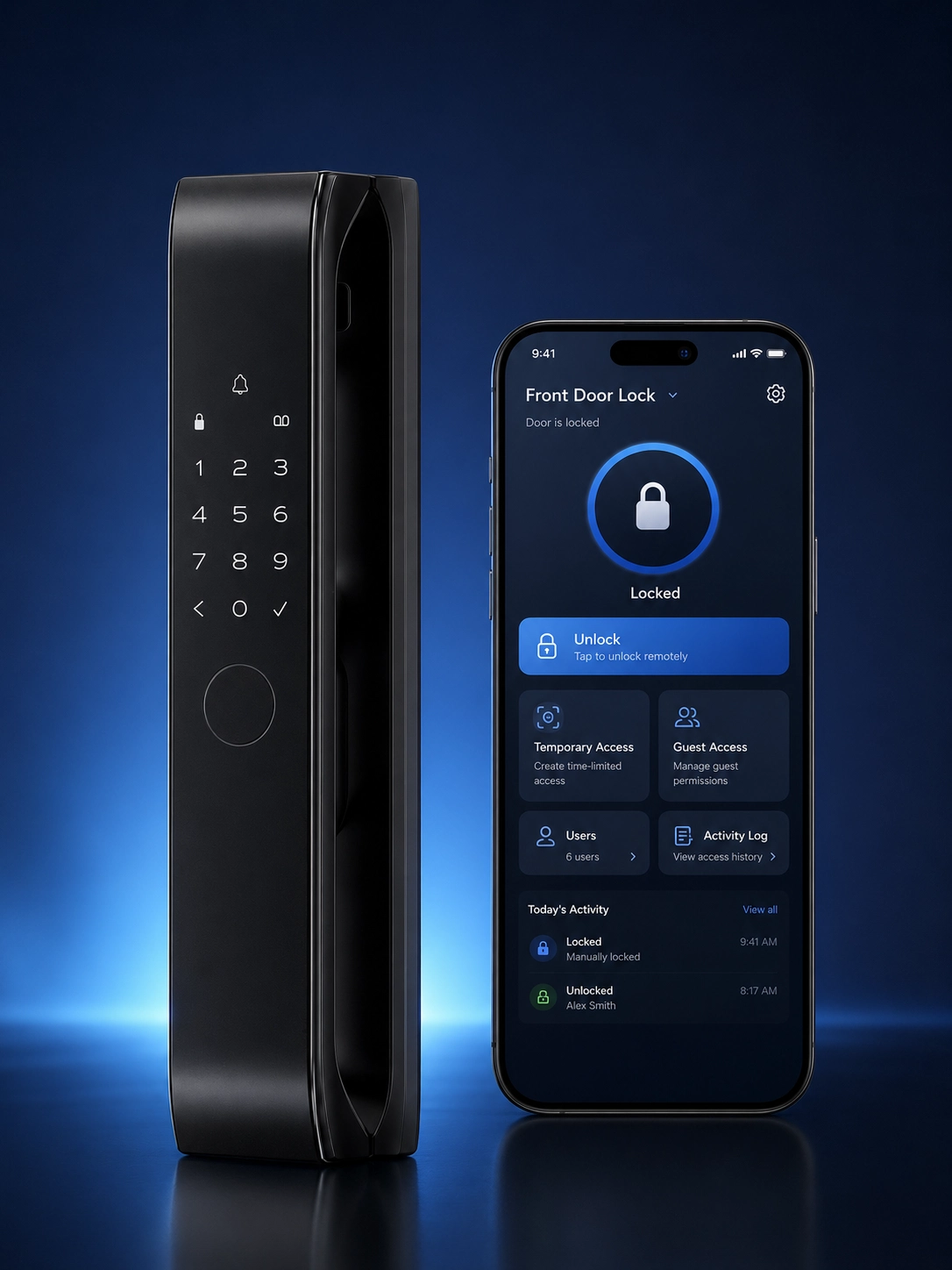
.webp)
Lock state, remote action and temporary access
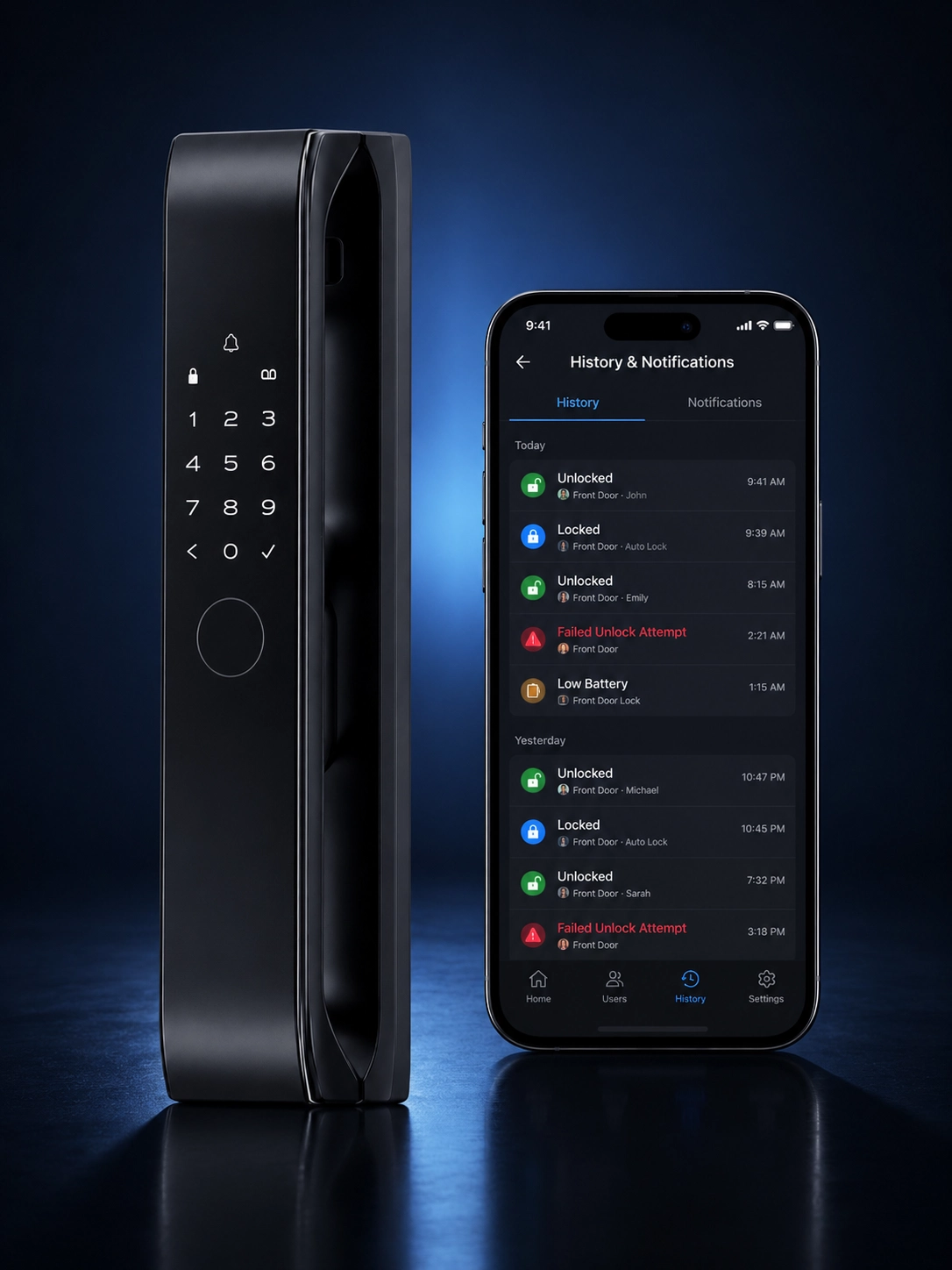
.webp)
Access events, alerts and credential activity
Property and hospitality access portal
Manage sites, rooms, users, roles, credentials and event records from a browser-based administrative workspace.
Property, hotel, office and multi-site administrators- Manage sites, rooms and lock groups
- Assign users, roles and temporary credentials
- Review events and export approved records
.webp)
Sites, rooms, lock groups and status
.webp)
Users, roles, validity windows and event export
Account, SDK, API and deployment integration
Define identity, credential, event and property-system interfaces together with the hosting and account model.
- Buyer-branded user accounts
- Temporary credential rules
- Event export and webhooks
- SDK or API integration
- Dedicated or private deployment where agreed
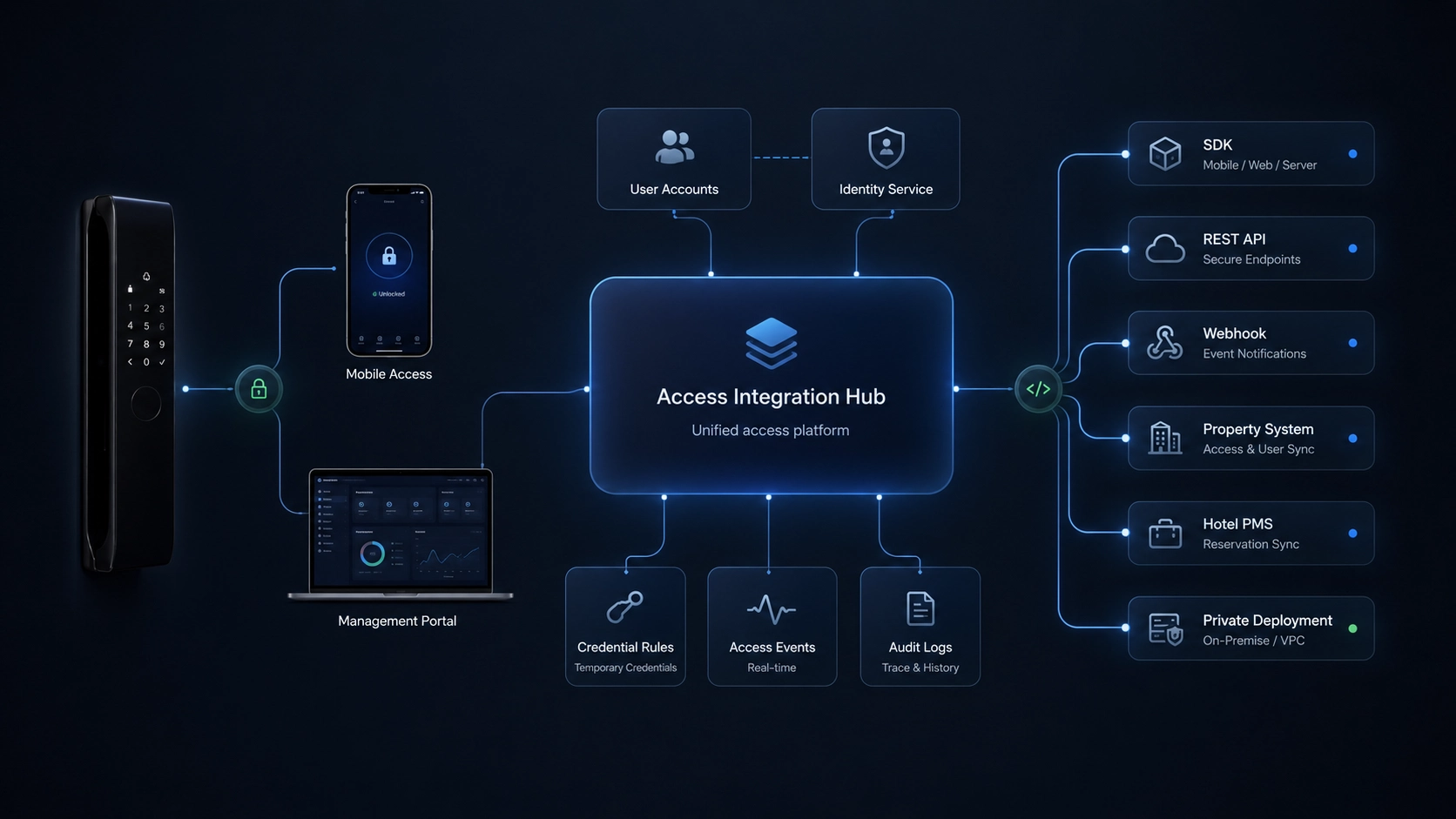
Connected access architecture
Lock hardware, mobile access, identity services, management portal and approved property-system interfaces.
Software areas you can configure
- App identity, languages and onboarding
- Access methods and credential rules
- Property, site, room and role model
- Notifications and event-retention rules
- SDK, API, hosting and account ownership
Software outputs for review
- Mobile access-flow definition
- Administrative portal definition
- Identity and credential model
- Integration boundary
- Configured software build for sample review
Decisions that turn the starting point into your product
A smart lock product platform that connects the lock hardware, access methods, low-power firmware, app permissions, cloud records and production checks.
Give product, engineering and procurement teams one access model to approve instead of reconciling separate lock, app, cloud and factory decisions.
- Lock form, enclosure and installation direction
- Keypad, card, biometric or mobile access options
- Bluetooth, Wi-Fi or selected cellular connectivity
- Battery, low-power and fault behavior
- Branded onboarding, access and account screens
- Cloud roles, temporary access and event records
- Packaging, documentation and production tests
Configure the product around your market—not around a generic demo.
Start from the closest product system, then agree what changes across the device, software, brand experience, deployment and production release.
Hardware and enclosure
Adapt the product form, interfaces, power, accessories, installation, labeling and packaging.
- Industrial-design and enclosure changes
- Interfaces, accessories and installation
- Labeling, packaging and documentation
Firmware and connectivity
Configure radio choice, device behavior, reporting, power, recovery and production programming.
- Wi-Fi, Bluetooth, NB-IoT or Cat.1 where applicable
- Device states, reporting and update logic
- Programming and functional-test release
App, web and brand experience
Define branded mobile and browser experiences, roles, languages, workflows, alerts and support.
- App identity and interface language
- User, operator and administrator workflows
- Dashboard fields, alerts and reports
Cloud, API, deployment and data
Agree interfaces, hosting, accounts, tenancy, source-code scope and product-data ownership.
- API and third-party integration
- Public, dedicated or private deployment
- Account, hosting, source-code and data ownership
Review the work behind the product,not just the finished enclosure.
Use samples, fixtures, validation units and product-specific records to verify what will be built and tested for Smart lock products.
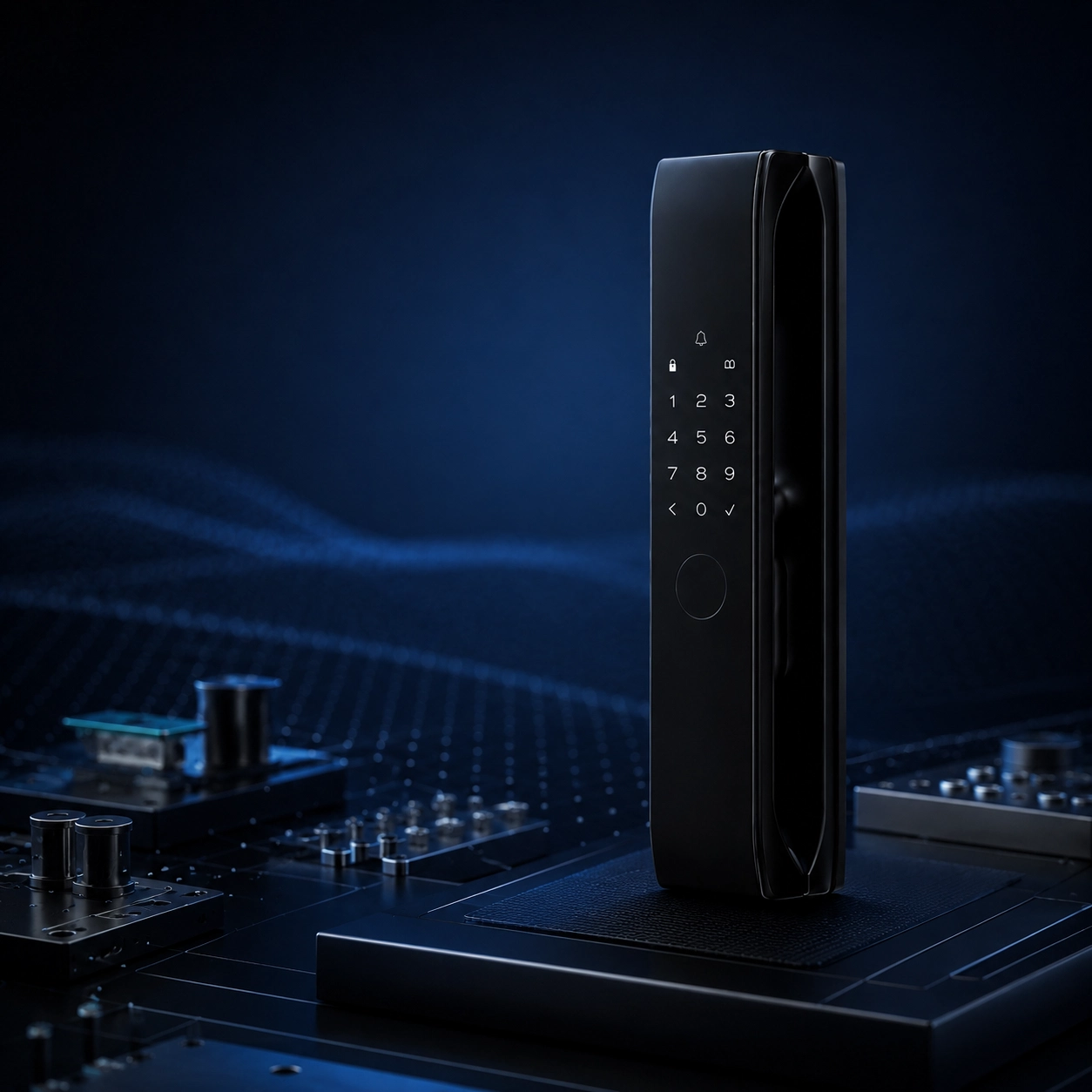
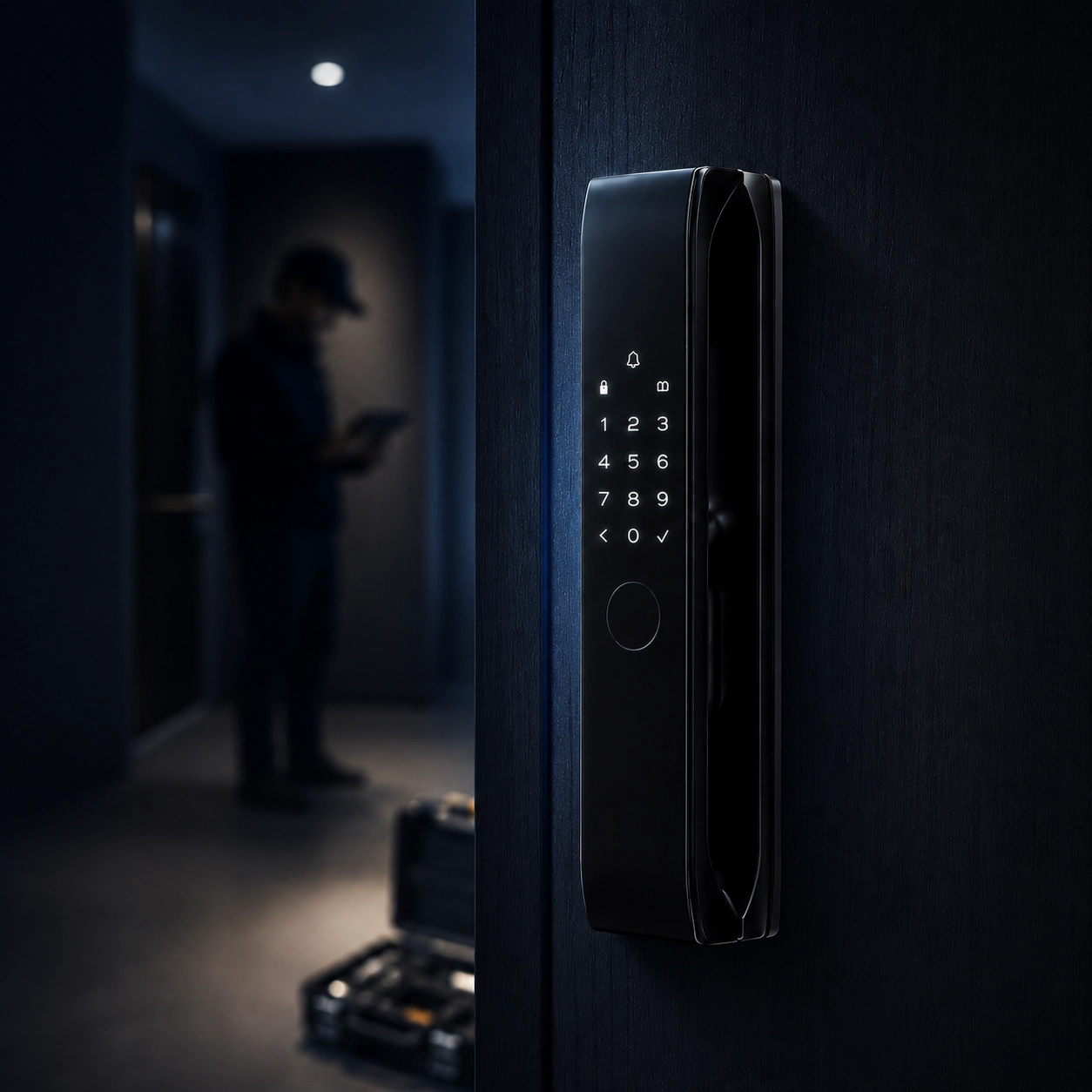
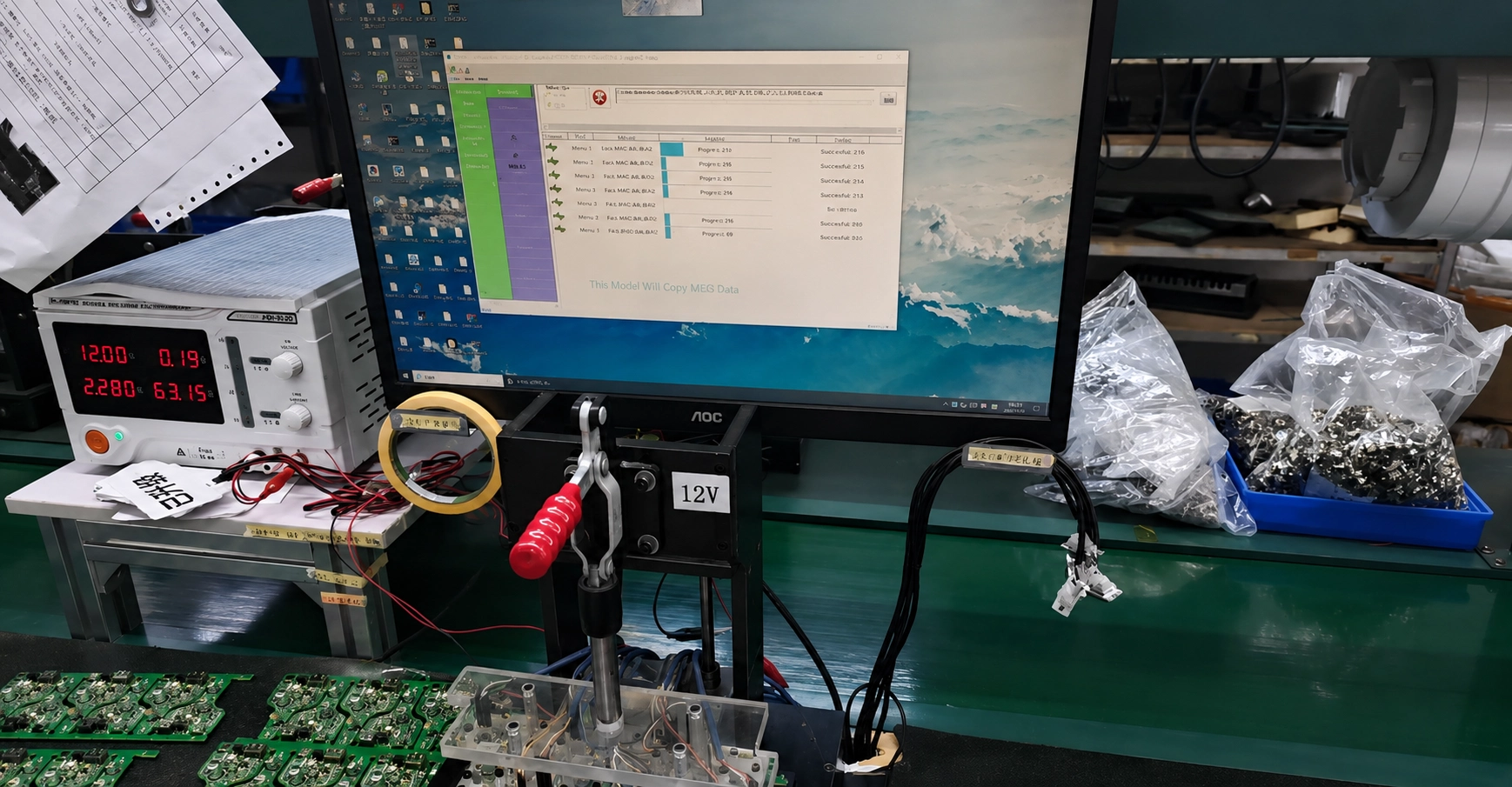
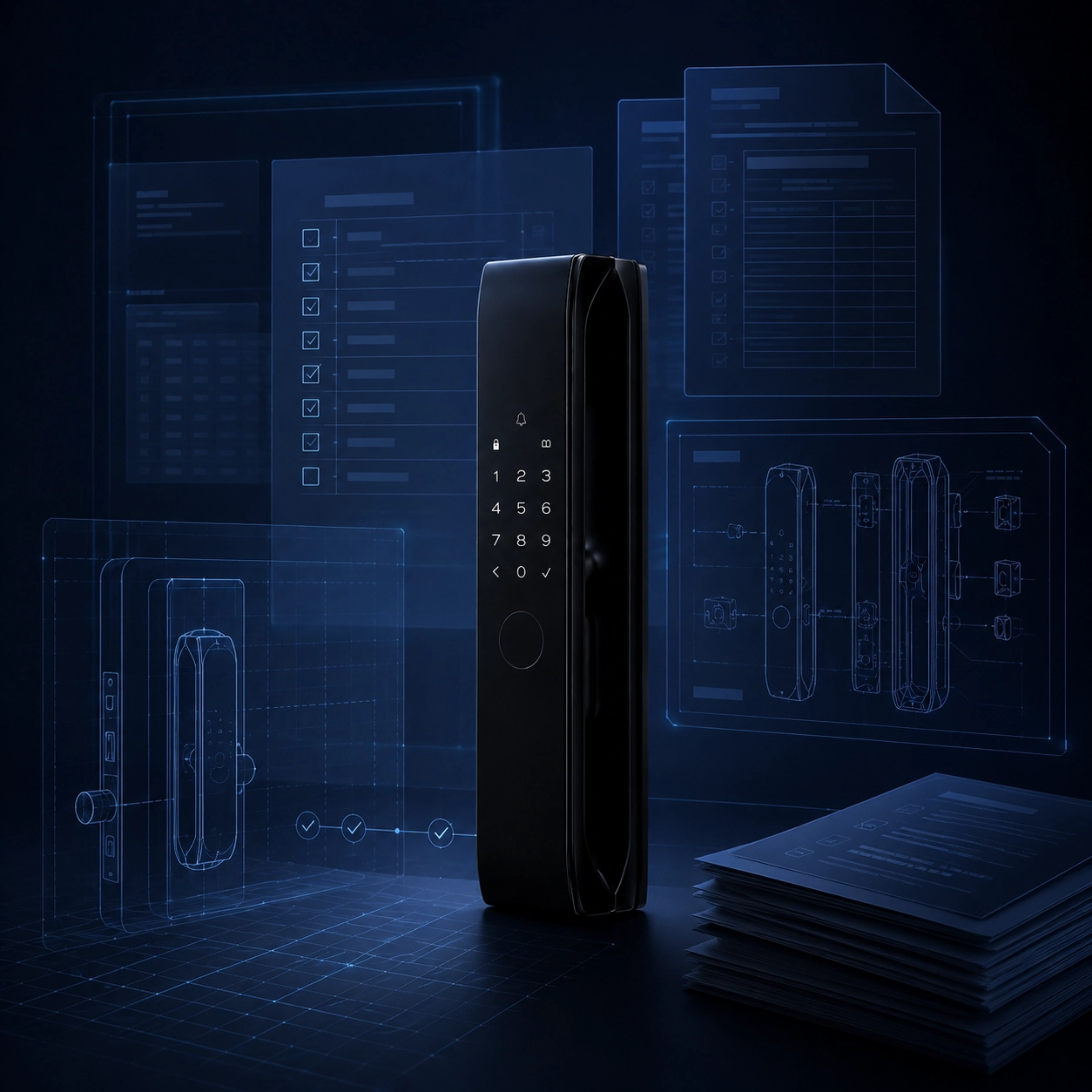
What stays fixed, what can change, and what must be checked again
Use the current Smart lock products reference as the starting point. Any change that affects the product, software, installation or market must be reviewed before release.
Configuration boundary
Lock and access method
- Current
- Reference lock sample with its selected credential, actuator and device-state flow.
- Can change
- Lock body, handle, credential method, enclosure, installation and branding.
- Recheck
- Mechanical fit, lock operation, credential behavior and installation conditions.
Power and connectivity
- Current
- Selected power arrangement, wireless path and reconnect behavior.
- Can change
- Battery or power arrangement, wireless option, reporting rules and gateway boundary.
- Recheck
- Power behavior, RF, reconnect and support on the target network.
App and permissions
- Current
- Device onboarding, binding, account roles, access actions and event records.
- Can change
- Branding, user roles, credentials, notifications, API and deployment model.
- Recheck
- Permissions, access records, recovery and app-cloud-device consistency.
Production release
- Current
- Programming, identity, communication and basic lock-function checks.
- Can change
- Configuration data, fixtures, packaging and acceptance records.
- Recheck
- Final test coverage, traceability and released hardware and software versions.
Typical buyer deliverables
- Configured lock sample
- Access-role and onboarding definition
- App and cloud screen scope
- Battery and connectivity validation plan
- Pilot and production test release
Validation boundary
Included in the reference configuration
- Startup, lock-state and selected credential behavior in current samples
- Selected connectivity and device-binding flow
- App roles, access actions and event workflow
- Programming and basic functional checks
Requires project-specific validation
- Final lock body, door, installation and mechanical conditions
- Battery, power, RF and target-network performance
- Security, privacy, account and credential responsibilities
- Electrical, radio and market compliance for the selected lock
Reference validation does not automatically transfer to a changed enclosure, radio, battery, software stack, installation, legal entity or target market.
Configuration sheets, sample test records and applicable certification files can be reviewed against the selected product configuration, subject to file applicability and disclosure approval.
Request supporting product documentsSmart Lock Products questions buyers ask
Hanwu develops OEM/ODM smart lock products by coordinating the lock hardware, access methods, low-power firmware, branded app, cloud permissions and production checks around one device configuration.
Best for
- Lock brands needing product and software together
- Access programs with role and record requirements
- Projects that need branded apps or private platforms
Check first
- Commodity mechanical lock sourcing
- Module-only projects with an existing finished lock stack
Typical scope
- Module, antenna and PCBA integration
- Low-power embedded firmware
- Access-role and credential logic
- Mobile onboarding and device management
What you receive
- Configured lock sample
- Access-role and onboarding definition
- App and cloud screen scope
Related decisions for Smart Lock Products
Open the use case, engineering layer or requirements guide that resolves the next product decision.
Smart Lock IoT Solution
Review access roles, onboarding, device states and deployment decisions for a smart lock system.
Private IoT Platform Deployment
Decide how lock accounts, data, hosting and integrations should be owned and operated.
Embedded Hardware and Firmware
Review board, interface, low-power firmware and recovery decisions for the lock.
Mobile App and Dashboard
Define onboarding, access permissions, event records and branded app screens for lock users.
Manufacturing and Testing
Review programming, fixture and functional-test decisions for a repeatable lock build.
Product requirements guide
Organize the information needed for a configured sample.
Turn this product into a reviewable sample brief.
Send the market, users, required functions, software boundary and what the first sample must prove.